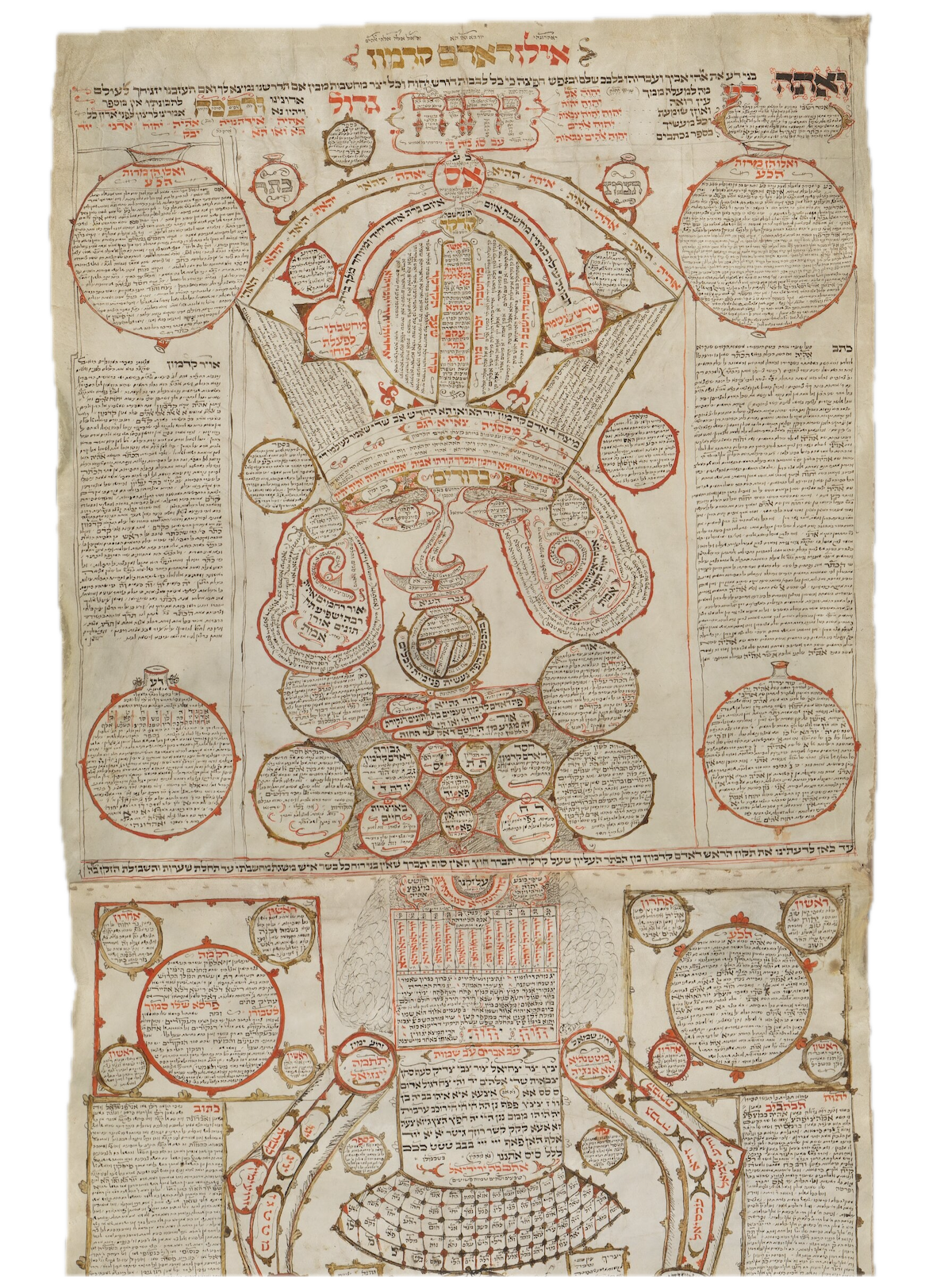
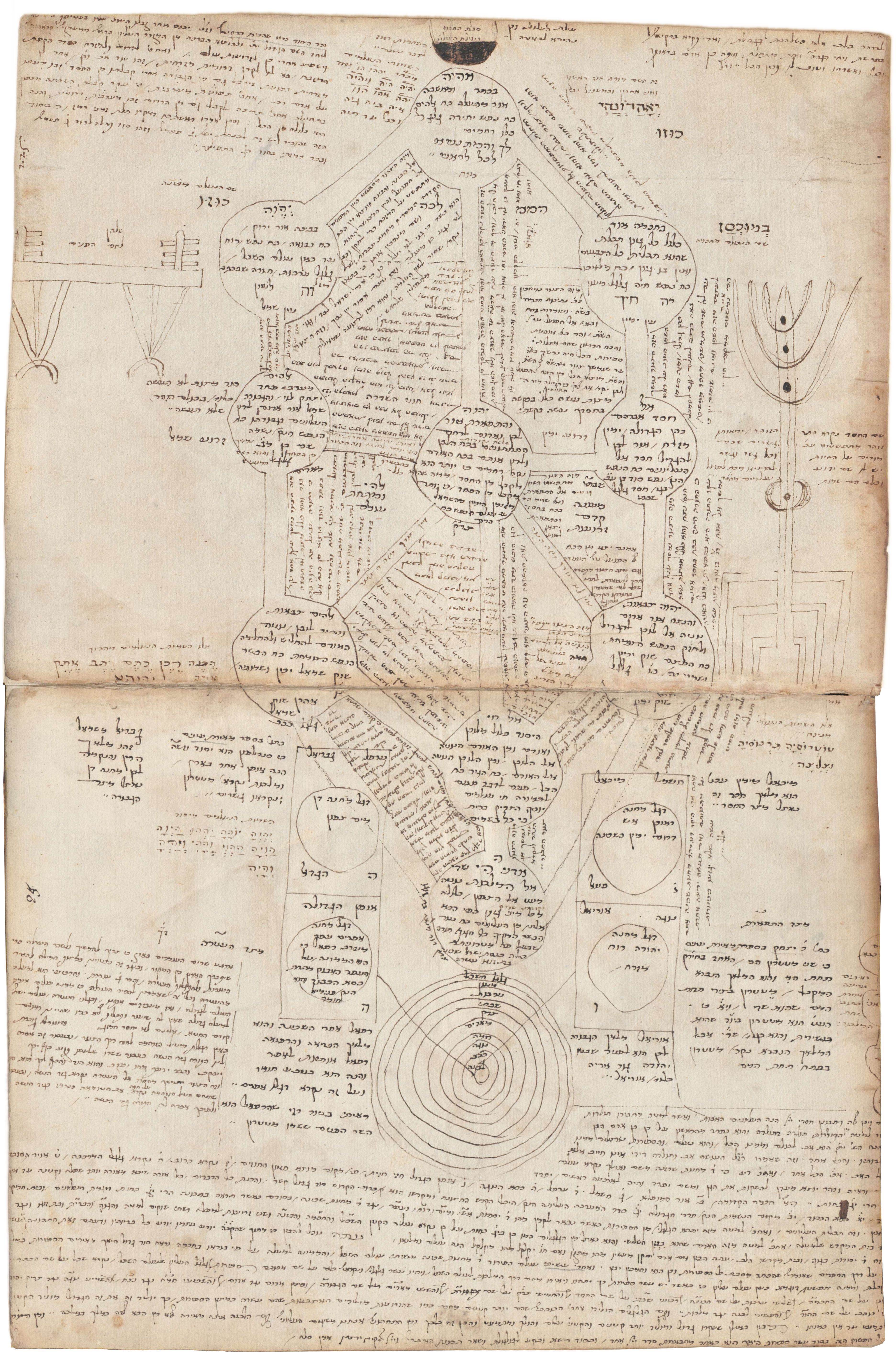
This project reconstructs the social and institutional life of ilanot tracing how these objects moved between Jewish communities and Christian collectors across the early modern period. Ilanot — Hebrew for “trees” — are large, elaborately illustrated parchment scrolls depicting the structure of the divine realm according to kabbalistic thought. Rooted in the medieval practice of mapping cosmic and spiritual hierarchies through arboreal diagrams, ilanot underwent a profound transformation with the rise of Lurianic Kabbalah in sixteenth-century Safed. Under the influence of Rabbi Isaac Luria’s teachings, these diagrams evolved from relatively static symbolic charts into richly detailed, dynamic visualizations of divine processes — creation, emanation, cosmic rupture, and repair — accompanied by dense explanatory texts. Functioning as both pedagogical instruments and devotional objects, Lurianic ilanot circulated widely across Jewish communities and, remarkably, found their way into the libraries of Christian Hebraists fascinated by Jewish mysticism. Understanding where these objects came from, who made them, and how they moved between hands and across cultural boundaries is essential to reconstructing the intellectual world they inhabited — and the influence they exerted on both Jewish and Christian readers who encountered them.
“Tracing Ilanot” follows the lives of these scrolls as material objects: where they were held, who was permitted to consult them, how librarians catalogued and described them, and under what circumstances they were bought, sold, or bequeathed. To answer these questions, the project brings together two complementary bodies of evidence — the objects themselves, analyzed through close manuscript description, and the archival record surrounding them, including acquisition ledgers, library catalogs, correspondence, and collectors’ notes. All findings will be integrated into a purpose-built digital platform that tracks the movements and ownership history of every known ilan across time and space, making this data freely accessible to researchers through network visualizations and linked archival documentation. Together, these approaches will produce the first systematic account of how Lurianic ilanot were preserved, transmitted, and interpreted across the early modern Jewish and Christian worlds.